
Why emperors kept reducing the silver in the denarius, how far it fell and when, how the trick coins worked, and what the price explosion of the third century meant for the people who were paid in this money.
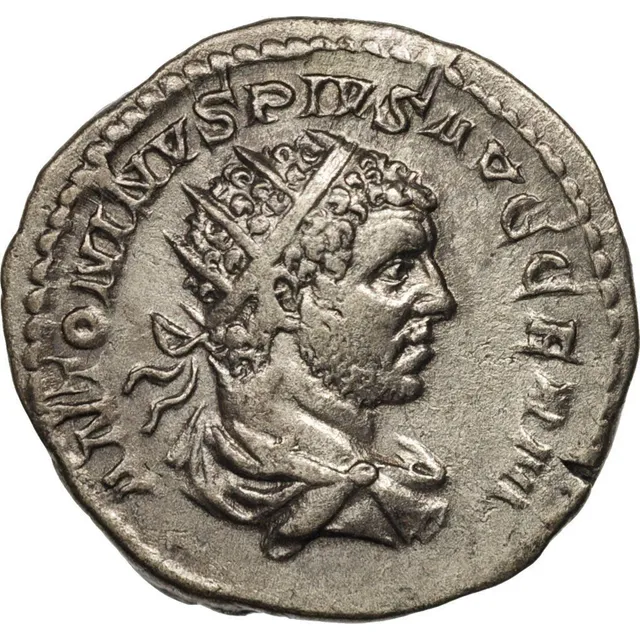
When a denarius left the mint in Augustus' day, it was nearly pure silver, about 3.9 grams of it. By the 260s AD, a coin that still passed as the same denomination contained almost no silver at all. NGC's published fineness series puts some issues of Gallienus, who reigned until 268, at 5% or less, and a few at around 2.5%. What happened in between is one of the longest-running monetary debasements on record, and the coin itself tells the story if you know what to weigh.
A coin built for a war
Rome introduced the denarius around 211 BC, in the middle of the Second Punic War against Hannibal, when the state badly needed a way to pay for armies. The Republican coin weighed around 4.5 grams and was struck at roughly 95 to 98% silver, according to the Encyclopaedia Britannica and standard numismatic references. That made it good money by ancient standards, and it stayed the backbone of Roman currency for the next four centuries.
Under Augustus and the emperors who followed him, the standard settled at about 3.9 grams and 98% fine, or better. This is the coin people usually picture: the denarius that paid a legionary and shows up in the Gospels as a day's wage.
Nero makes the first cut
The first big reduction came from Nero around 64 AD. He lowered the weight by roughly 12.5%, to about 3.3 or 3.4 grams, and dropped the fineness from about 98% to roughly 93%. NGC's series on the decline of Roman silver coinage gives those figures, and they matter less for their size than for what they started. Once an emperor had shown that the silver content could be quietly reduced, every stressed treasury had the same option on the table.
It is worth knowing that emperors did try to go back. Domitian restored the old purity around 84 AD, then reversed himself within a year or so and accepted the lower standard again. Good intentions did not survive contact with the cost of the army.
The slide, century by century
Fineness percentages for ancient coins are scholarly estimates based on surviving specimens, and different studies disagree at the margins. The table below follows NGC's published series, with the disagreements shown rather than smoothed over. Treat every figure as an approximation for the period, not a guarantee for every coin.
| Period | Approximate silver content | Notes |
|---|---|---|
| c. 211 BC (Republic) | ~95–98%, ~4.5 g | Wartime introduction; Britannica gives 4.57 g |
| Augustus, 27 BC–64 AD | ~98% or higher, ~3.9 g | The classic denarius |
| Nero, c. 64 AD | ~93%, ~3.3–3.4 g | First great reduction |
| Vespasian, 69–79 | ~89%, sometimes ~80% | Post civil-war finances |
| Trajan, from 107 | ~89–90% | Slow drift continues |
| Antoninus Pius, by 148 | ~83–84% | Falls during a famously peaceful reign |
| Commodus, by the 190s | ~71% | Second century ends well below where it started |
| Septimius Severus, 193–211 | roughly 50–57% | NGC gives ~57%; other tables ~50%. Army pay rises and donatives were the driver |
| Gordian III, 242–244 | ~37% (Rome), ~43% (Antioch) | Mints differed from each other |
| Valerian, by 260 | as low as ~15% | Empire under simultaneous invasion and civil war |
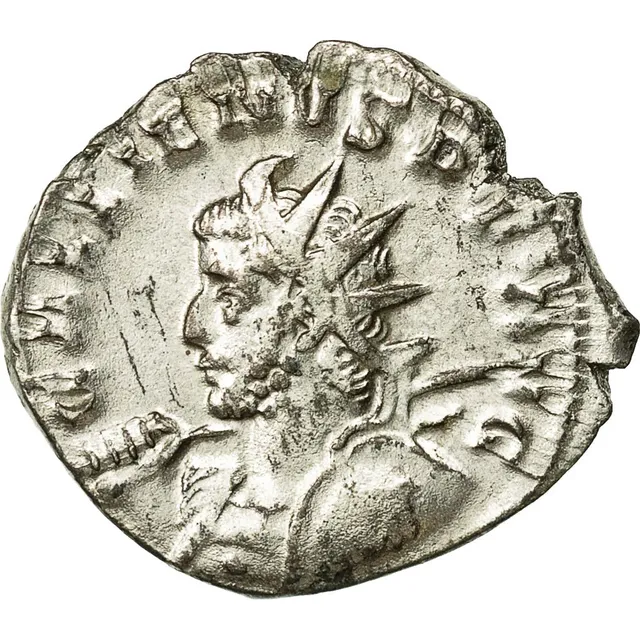
| Gallienus, by 268 | ~5% or less, some ~2.5% | Effectively bronze coins wearing a silver face |
| Aurelian's reform, 274 | new coin at ~5% fine, 20:1 copper to silver | An honest restatement of what the coinage had become |
| Diocletian's argenteus, c. 294 | ~95%+, ~3.4–3.9 g | A genuine silver coin again, but a reset rather than a recovery |
Why emperors did it
The short answer is the army. Soldiers wanted pay in good silver, and emperors who failed to pay them did not usually keep the throne. Septimius Severus famously raised army pay and handed out large donatives, and his coinage is where the fineness falls to around half. Each reduction let the treasury stretch the same silver across more coins, which in the short run funded the troops and in the long run taught everyone that the coin in hand was worth less than its face claimed.
Caracalla's solution in 214/215 deserves a mention for sheer nerve. He introduced a larger coin, the antoninianus, and tariffed it at two denarii, but it contained only about one and a half times the metal of the old coin. Anyone accepting it at face value was taking a quiet pay cut, and prices responded accordingly. Later emperors made the same coin in bronze with a thin silver coating, which brings us to the most revealing artefact of the whole period.
The silver wash
Look at a late antoninianus from the 260s and it can still look like silver. That is surface enrichment: a low-silver alloy treated so the face of the coin comes out bright, a finish NGC and CoinWorld both describe on these issues. The state was, more or less openly, manufacturing the appearance of silver money. A coin that needs a coat of paint to pass as silver is telling you exactly what the treasury thinks of its own currency.
What it did to the people holding the coins
Debasement was a symptom and an amplifier inside a broader third-century crisis that also included civil wars, plague, and invasions, and historians are careful not to blame the currency for all of it. But the price evidence is hard to ignore. By the end of the century, prices had risen so far that Diocletian issued his Edict on Maximum Prices in 301, capping roughly 1,400 goods and services, including wages. Its surviving preface blames greed and profiteering for the situation, which tells you the government at least believed ordinary people were being squeezed by rising prices.
The edict failed. The Christian writer Lactantius, who lived through the period, records that goods disappeared from the markets and that violence broke out over the caps, and the price list was abandoned not long after. Fixing prices without fixing the money did not work in 301, and the attempts at monetary repair that did eventually stick, Aurelian's reform of 274 and Diocletian's high-purity argenteus of around 294, were honest resets rather than a return to the old coin. The denarius itself faded away; it had spent its last decades as a unit of account for prices that the actual coins no longer resembled.
Sources & References
- Encyclopaedia Britannica: denarius: introduction and Republican weight
- NGC Ancients: The Decline of Roman Silver Coinage, Part I (11 September 2018): fineness series from Augustus to Gallienus
- British Museum object record 1946,1004.770: denarius of Septimius Severus
- British Museum object record R.15321: denarius of Septimius Severus
- Online Coins of the Roman Empire: RIC IV Septimius Severus 29A
- R.A.G. Carson, "The Reform of Aurelian", Revue numismatique (1965)
- A. Wassink, "Inflation and Financial Policy under the Roman Empire", Historia 40 (1991)
- Diocletian's Edict on Maximum Prices (301), with the Aphrodisias fragments
- Image: Caracalla antoninianus, Wikimedia Commons, CC0
- Image: Gallienus antoninianus, Wikimedia Commons, CC0
Fineness percentages are scholarly estimates for the period rather than guarantees for every coin, and where published series disagree the table shows the range. Reviewed against these records on 7 September 2026. If a date, figure, or interpretation needs correction, please contact hello@cointoss.uk.